


Aesthetic - Decorate & Design
4.7163.00 Reviews
App Specs
- Version
- 6.4.0
- Updated On
- License
- Free
- Downloads
- 10,000+
- Developer
- Fliq Lab
- Categories
- Casual
- Platform
- Android
Screenshots




 Analysis by AppCompare
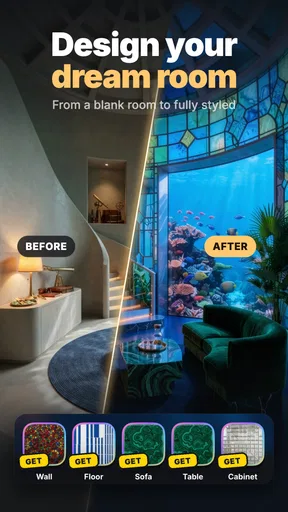
I approached Aesthetic - Decorate & Design expecting a light decorating game, but what stayed with me was how much the presentation affects the experience. The basic idea is easy to understand: shape attractive rooms, make design choices, and take part in a wider competition. It belongs to the casual game category, so it is aimed at short, approachable sessions rather than demanding controls or complicated rules. I found it most appealing when I wanted something creative to do without the pressure of a traditional strategy or action game.
That simplicity also makes it interesting from an inclusion point of view. A decorating game can be welcoming to people who do not enjoy fast reactions, combat, or complicated controls, but visual design still creates its own demands. In my experience, the important questions are not only whether the rooms look good, but whether the interface is comfortable to read, whether decisions can be made without rushing, and whether the competitive side feels enjoyable for different kinds of players.
Fliq Lab presents the game as a free download for everyone, with optional purchases ranging from $1.99 to $99.99 per item. It has a 4.7 average from around 1.7 thousand ratings, along with more than 10 thousand installs. Those figures suggest that the concept has found an audience, although they do not tell me whether every player will find the visual presentation equally comfortable.
How the design experience works in everyday play
I find the most useful way to approach this game is to treat each room as a series of visual decisions, not as a test of whether I have perfect taste. In the next section, I’ll focus on how that design-first loop can fit into ordinary play, including a small habit that helps me make more intentional choices without turning a quick session into a long one.
Readable rooms, clear choices, and a visual-first layout
The strongest part of the game is its visual identity. The whole experience is built around the pleasure of arranging a room and judging how the pieces work together. That makes the game immediately understandable: I can look at a space, consider its style, and focus on the atmosphere I want to create instead of learning a long chain of rules first.
For many players, this is a genuine accessibility advantage. There is no need to interpret a complex fictional world or memorize a large set of commands before making progress. The room itself communicates the goal. If you enjoy color, furniture, decoration, and visual comparison, the central activity is naturally inviting.
At the same time, a visual-first game depends heavily on contrast and clarity. Small labels, decorative backgrounds, or crowded menus can make an otherwise simple choice harder to follow. I would recommend playing on a comfortably sized screen and checking that the device display is not set so dimly that subtle colors disappear. This matters especially when a design decision depends on seeing the difference between similar shades or materials.
Worth Reading Before You Choose

Flipboard Shows What News Apps Must Do Beyond the Feed

Switching to Android Auto Means Rethinking Your Driving Routine

Google Calendar Makes a Crowded Week Easier to Manage

Ludo King Makes the Most of the Minutes Between Plans

Baby Panda World Brings Quick Play to Modern Phones, but Its Game Library Feels Busy

ESPN’s Live Game View Makes Following Close Games Easier
I also found that the game is easier to approach when I make one design decision at a time. Instead of trying to judge the entire room immediately, I look first at the largest visual element, then at the supporting pieces, and finally at small accents. That workflow reduces visual overload and makes the decorating process feel more deliberate. It is a useful habit for anyone who enjoys the creative side but becomes tired when too many details compete for attention.
Navigation is likely to feel most comfortable for players who are already familiar with mobile game conventions. The appeal comes from moving between a room, available design choices, and the wider competitive context. I did not experience the concept as intellectually difficult, but the number of visual decisions can still make a session feel busy. Players who prefer plain menus and text-led interfaces may find this style less immediately comfortable than a puzzle game with a cleaner, more restrained screen.
Motor demands are gentle, but not completely irrelevant
Compared with action games, this is a low-pressure experience. The main challenge is aesthetic judgment rather than rapid aiming, repeated tapping, or precise timing. That makes it a better candidate for people who want a game that can be played at a calmer pace. It may also suit someone whose hands tire during games that require constant movement or quick reactions.
Still, “casual” does not automatically mean effortless for every player. Decorating interfaces often involve selecting objects, moving through options, and making repeated taps. If a player has difficulty with small touch targets or sustained phone use, the practical comfort will depend on the device and how the interface presents each choice. I would treat a larger screen as a meaningful advantage, not because the game requires advanced hardware, but because it gives the room and controls more breathing space.
One useful approach is to pause between groups of choices rather than trying to complete a room in one uninterrupted sitting. This helps with hand fatigue and also improves judgment. When I rush, I tend to choose the first item that looks attractive; when I take a short break, I notice whether it actually fits the room. The same habit benefits players who need more time to process visual information.
The absence of fast action makes the game suitable for a wider range of motor abilities than many popular mobile genres. However, I would not describe it as fully hands-off or effortless. It remains a touch-based game, and someone who needs switch access, voice control, or unusually large controls should test the basic interaction before committing time or money. The experience is gentle in pace, but the exact physical comfort still depends on the player and device.
Color, contrast, and sensory comfort
The visual style is both the reason to play and the area that deserves the closest attention. Aesthetic design games ask players to compare colors, textures, shapes, and overall balance. That can be relaxing for someone who enjoys visual composition, but tiring for someone sensitive to busy screens or subtle differences.
I would especially consider this before playing for a long session. A room can contain many decorative elements, and the competitive framing may encourage repeated checking and comparison. Lowering screen brightness to a comfortable level, using a familiar display setting, and taking regular breaks can make the experience less demanding. These are simple adjustments, but they matter more here than they would in a mostly text-based game.
Players with color-vision differences may find some design comparisons easier than others. The game’s core appeal depends on appearance, so a choice that seems obvious to one person may be less distinct to another when the difference is mainly hue. I would focus on shape, proportion, contrast, and placement rather than relying only on color. That approach can also produce better rooms, because a strong design usually needs more than a matching palette.
People who prefer reduced visual stimulation may want to keep sessions short. The game can be used as a quiet creative break, but it is not the same as a minimalist note-taking or drawing tool. Its purpose is to present attractive rooms and invite comparison, so visual richness is part of the experience rather than something that can simply be ignored.
Playing in different situations
This is the kind of game I can imagine opening during a short break, while waiting for an appointment, or at the end of the day when I want a creative activity without a large commitment. The casual format makes it easier to fit around everyday life than a game that expects a long uninterrupted campaign. A player can think about one room, make a few choices, and return later when there is more time.
That flexibility is useful for people with changing schedules, but it also creates a small trap: competitive games can make a short break feel less short. If I begin comparing designs or trying to improve a room, I may stay longer than planned. Anyone who needs strict time boundaries should decide in advance how long to play and stop at a natural point rather than relying on the game to do it for them.
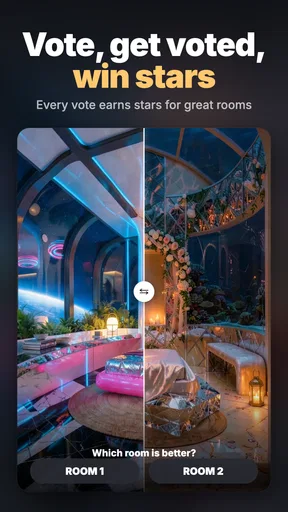
The worldwide competition adds another layer. Some players will enjoy seeing how their taste stands against other participants and will treat each room as a small creative challenge. Others may find ranking pressure distracting or discouraging, especially if they prefer decorating purely for personal satisfaction. The game is a better fit for the first group, although I think it can still work for the second if the competitive element is treated as background rather than a measure of personal ability.
It may also suit households where people enjoy discussing design choices together. I can imagine showing a room to a friend, asking which arrangement feels more balanced, and using that conversation to make the activity social without needing a multiplayer session in the traditional sense. That is one of the more appealing everyday uses: it gives people something concrete to react to, even when they have different tastes.
Where the free model changes the experience
The game is free to download, which lowers the barrier to trying it. That is important for a casual title because the main question is whether the visual style and decorating loop appeal to you personally. I would install it first, explore the basic rhythm, and decide later whether optional spending adds enough value to justify it.
The available purchases span from $1.99 to $99.99 per item. That is a wide range, so I would be careful not to treat every attractive design opportunity as something that needs to be bought. A sensible approach is to set a personal limit before playing and avoid spending simply because a room feels unfinished. In a decorating game, the desire to perfect a visual result can make optional items feel more urgent than they really are.
This is also where the game may be less suitable for younger players, even though its content rating is Everyone. The age rating describes the content audience, but it does not replace supervision around purchases. If a child is using the game, I would make sure the device’s purchase controls are appropriate and explain that free access does not mean every decorative option is free.
For adults who dislike in-app purchase systems, the model may be a reason to skip the game even if the decorating concept looks appealing. A paid game with a simpler purchase structure may be a better choice for someone who wants to unlock a complete experience without making repeated decisions about optional items. On the other hand, players who only want occasional creative sessions may appreciate being able to try the game without paying at the start.
How it compares with familiar casual alternatives
Compared with a match-three game, this offers less emphasis on quick problem solving and more on personal taste. A puzzle alternative is usually easier to judge in terms of success: the board is cleared or it is not. Here, satisfaction comes from making a room feel coherent and from seeing how other people respond to that result. That makes the experience more expressive, but also more subjective.
Compared with a life simulation game, the focus is narrower. I would not choose this when I want a large world, character relationships, or a long-running personal story. Its strength is concentration: it takes the decorating idea and places it at the center. That narrower scope can be refreshing when I do not want to manage many systems at once.
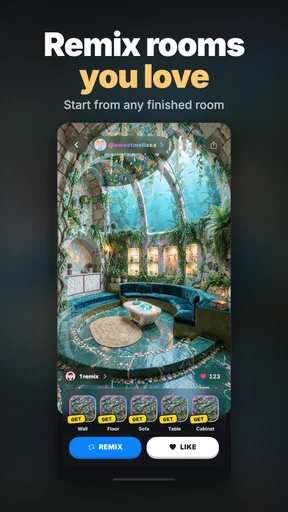
Compared with a pure interior-design tool, it adds the motivation of competition. A design application may give more freedom and less pressure, while this game gives the act of decorating a goal and a sense of audience. The better option depends on what I want from the session. If I want to experiment privately, a design tool may be more comfortable. If I want a playful challenge and enjoy seeing how my choices compare, this game is more engaging.
Who will enjoy it, and who should look elsewhere
I think the best audience is someone who enjoys visual decisions, wants a relaxed mobile game, and likes the idea of turning a room into a small design statement. It is particularly suitable for players who prefer creativity over reflexes and who can comfortably read a visual interface on their device.
It is also a reasonable choice for someone looking for a short activity that can be shared informally with friends. You do not need to be an experienced designer to participate; the appeal comes from having an opinion about what looks balanced, warm, modern, playful, or simply attractive.
I would be more cautious if you have difficulty distinguishing subtle colors, become uncomfortable with visually dense screens, or need very large and highly configurable touch controls. The game may still be usable, but its central visual language could create more work than enjoyment. I would also skip it if competitive comparison makes creative hobbies stressful or if you strongly prefer games with no optional purchases.
The current version is 6.4.0, and the minimum operating system is Android 7.0. That makes the technical entry point relatively broad for Android users with older compatible devices, although the comfort of the experience will still depend on screen size, display quality, and general device responsiveness. Fliq Lab is the developer behind the game, and the title was released on April 15, 2026.
My inclusive verdict
After looking at the game through the lens of different abilities and situations, I see a thoughtful strength in its calm, visual-centered format. It avoids the rapid reactions and complicated controls that exclude many players from other genres. The decorating focus also gives people several ways to participate: careful color selection, structural balance, personal taste, or simply the pleasure of making a room feel pleasant.
Its limitations come from the same source. Because appearance is the main language, visual clarity and sensory comfort matter a great deal. A player who needs strong contrast, less visual density, or more adaptable touch interaction may find the experience less accessible than its casual label suggests. Those are not reasons to dismiss it automatically, but they are good reasons to test it in a short session before investing heavily in it.
My practical recommendation is to begin with a larger screen if possible, play in brief blocks, and judge rooms by more than color alone. Use shape, spacing, contrast, and proportion as your design tools. Keep purchases deliberate, especially when a competitive result makes an optional item feel necessary. These habits make the experience calmer and help preserve the creative part that makes it worthwhile.
Overall, I would recommend Aesthetic - Decorate & Design to players who want a free casual game built around rooms, taste, and friendly competition rather than speed. It is not the right choice for everyone, particularly people seeking a minimalist interface, a private design sandbox, or a purchase-free experience. For the right player, though, it offers a pleasant way to turn a few spare minutes into a small creative project, with enough competitive energy to keep the decorating process from feeling passive.
Pros
- Relaxing gameplay with no time limits or competitive pressure.
- Wide range of furniture and decorative items to experiment with.
- Simple controls make designing rooms easy for beginners.
- Creative challenges provide inspiration for different interior styles.
- Pleasant visuals and calming presentation suit casual play sessions.
Cons
- Some premium items may require in-app purchases to unlock.
- Progress can feel slow when waiting for new design opportunities.
- Limited room customization may disappoint experienced design fans.
- Repeated tasks can become predictable after extended play.
- An internet connection may be needed for certain features.
FAQs for Aesthetic - Decorate & Design
What is Aesthetic - Decorate & Design?
Aesthetic - Decorate & Design is a creative decorating game focused on arranging and styling rooms, spaces, and decorative elements. It lets you experiment with colors, furniture, layouts, and visual themes while working toward a polished aesthetic. The app is designed for casual play, so it is easy to start even if you have no previous experience with interior design games.
How does the gameplay work in Aesthetic - Decorate & Design?
The main experience revolves around decorating spaces by selecting furniture, accessories, colors, and other design details. You can combine different items to create a look that matches the requested style or your personal taste. Progress generally comes from completing design tasks, unlocking additional options, and improving your rooms, making the game suitable for short sessions or longer creative play.
Is Aesthetic - Decorate & Design free to download and play?
Aesthetic - Decorate & Design can generally be downloaded at no initial cost, but the free version may include advertising, optional purchases, or limits on certain decorative items and progression features. Before installing, it is worth checking the current store listing for pricing, available in-app purchases, and any subscription information. Some premium content may be helpful, but it is not necessarily required to enjoy the basic decorating experience.
Does the game require an internet connection?
An internet connection may be needed for downloading the application, displaying advertisements, synchronizing progress, or accessing online features. Some decorating activities could remain available offline, but the exact functionality can vary depending on the version installed and the device being used. If you plan to play while traveling or without mobile data, test the game offline first rather than assuming every feature will work without a connection.
Is Aesthetic - Decorate & Design suitable for children?
The game is generally approachable for users who enjoy creative design and casual decorating, including younger players who can navigate simple visual controls. However, parents should review the app’s age rating, advertising, in-app purchase settings, and privacy information before allowing children to play. If purchases are available, enabling parental controls is recommended to prevent accidental transactions while exploring furniture and customization options.


